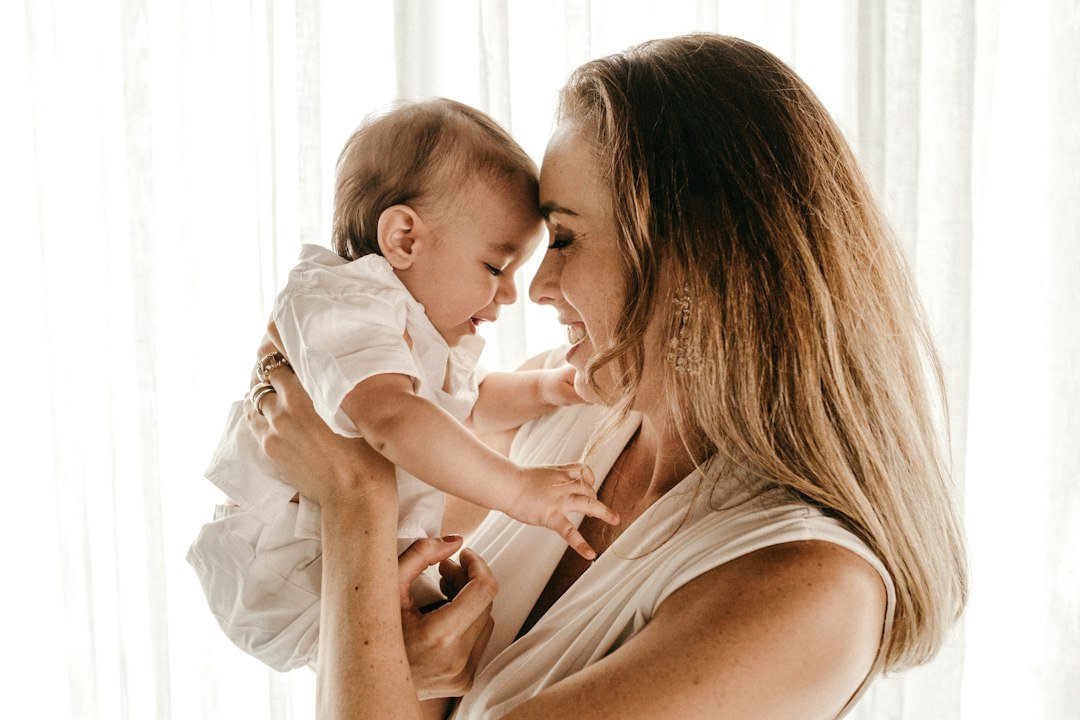
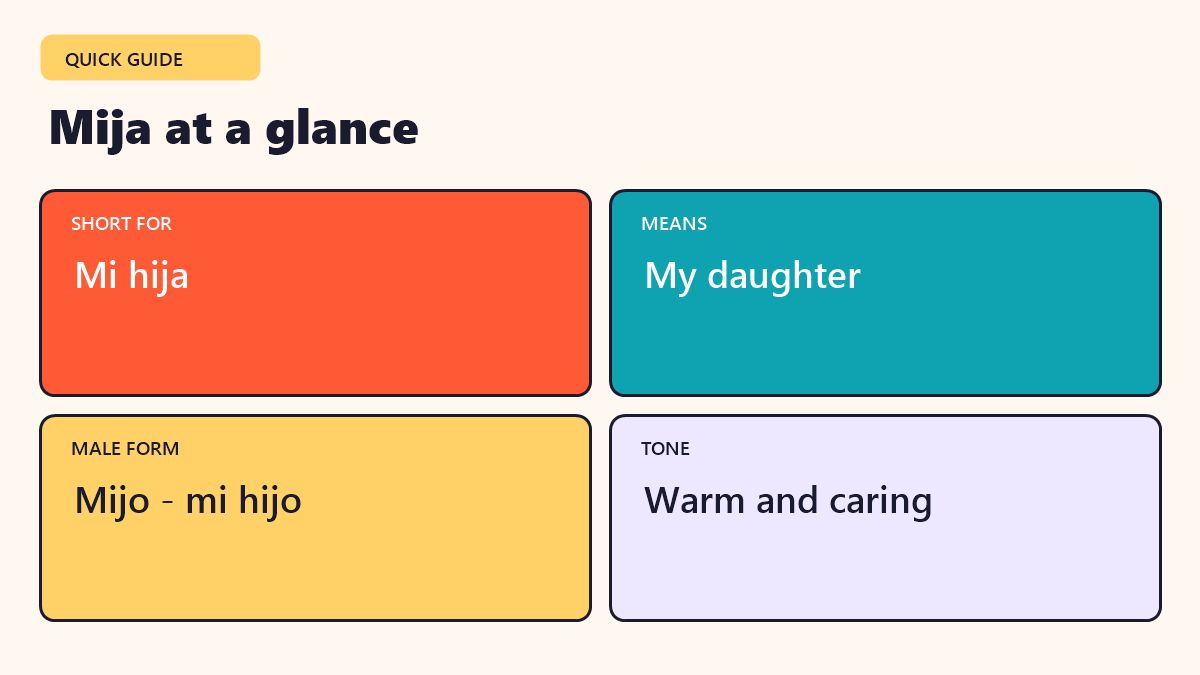
Quick answer: Mija is short for “mi hija,” which means “my daughter” in Spanish. Families use it as a loving nickname, and friends or elders may also use it with younger women. Its male form is mijo, from “mi hijo.”
Featured image: Photo by Jonathan Borba on Unsplash
If you have ever watched a family show or heard a grandmother talk to her granddaughter in Spanish, you may have heard the word “mija.” It sounds soft and caring. This guide explains what it means, how families use it and how to use it respectfully if you are learning Spanish.
In this guide
What does mija mean?
Mija is short for “mi hija,” which means “my daughter.” In everyday speech the two words melt into one, and the “h,” which is silent in Spanish, disappears. Parents, grandparents and other relatives say it to show love: “Come here, mija,” or “Mija, did you eat?”
Its male form is mijo, from “mi hijo,” meaning “my son.” There are also tiny, extra-affectionate forms: mijita and mijito.
How families use mija
In many Latin American homes, “mija” is part of everyday language, not just for special moments. A mother might say it when she is happy, worried, proud or even slightly annoyed. The meaning stays warm, and the tone of voice shows the mood.
Mother: Mija, ya comiste?
Daughter: Sí, mamá.
That means, “My daughter, have you eaten?” and “Yes, Mom.” Notice the care behind the question. In many cultures, asking about food is a way of saying “I love you.”
Mija beyond the family
People also use mija with younger women who are not their daughters, as a kind and respectful way to talk. A neighbor, a family friend or a market seller may say “mija” to a girl or young woman with a friendly tone. Between close friends, it can sound sweet or playful.
However, the same word can feel different in a different setting. Between strangers, especially from different backgrounds, “mija” can sound too familiar or even patronizing. That is why it is wise to wait until you know how the word is used in the group you are with.
The family of words
| Word | Spanish | Meaning |
|---|---|---|
| Mija | Mi hija | My daughter |
| Mijo | Mi hijo | My son |
| Mijita | Mi hijita | Dear little daughter |
| Mijito | Mi hijito | Dear little son |
| Mijos | Mis hijos | My children |
The endings “-ita” and “-ito” make a word smaller and sweeter in Spanish, which is why “mijita” feels extra loving.
When to use mija, and when to skip it
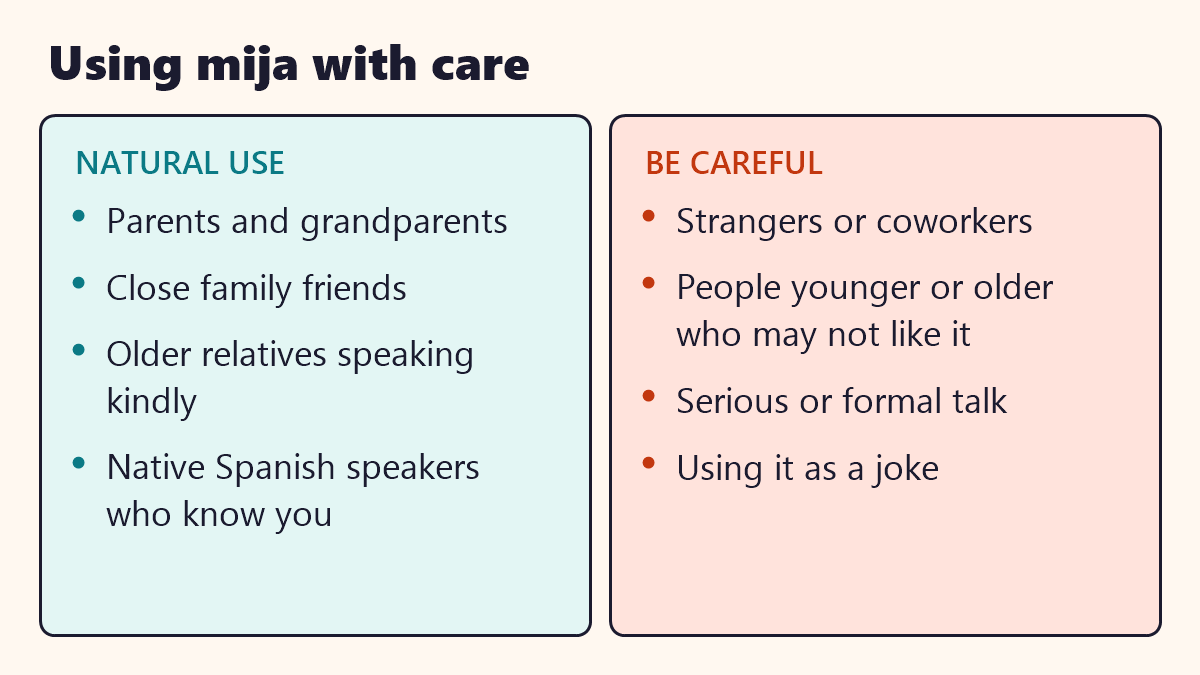
If you are learning Spanish, listen to how native speakers around you use the word, and follow their lead. When in doubt, a person’s name is always polite.
Mija in songs, shows and culture
You will hear “mija” in many family movies, television shows and songs. For many Mexican American families, it is a small piece of home that connects generations. Because of that, the word often carries feelings of memory and belonging, not only a simple meaning.
Common mistakes with mija
- Using it with strangers. It can sound too personal.
- Using it as a joke. For many people, it is a sincere, loving word.
- Mixing up mija and mijo. Use mija for girls and mijo for boys.
- Pronouncing the “h.” The “h” in Spanish is silent, so say “MEE-ha.”
Key takeaways
- Mija means “my daughter,” from “mi hija.”
- Mijo is the male form, from “mi hijo.”
- It is a warm term used by family and close friends.
- Use it only when you know the culture and the relationship.
- The “h” is silent, so say “MEE-ha.”
Mija said with different tones
The exact feeling behind “mija” changes with tone of voice, not just the word itself. A soft, slow “mija” can comfort someone who is upset. A quick, warm “mija” can simply mean hello. A sharper, more clipped “mija” paired with a parent’s stern look usually means a gentle scolding is coming, even though the word itself never changes.
Mija in text messages
Mamá: Mija, llámame cuando puedas.
Hija: Sí, mamá, en un ratito.
In texting, “mija” often appears exactly like this, softening what could otherwise read as a blunt request into something warmer and more personal.
Frequently asked questions
What does mija mean?
Mija is a short form of “mi hija,” which means “my daughter.” It is often used as a loving term for girls and young women.
What does mijo mean?
Mijo comes from “mi hijo” and means “my son.” Families use it as a loving nickname for boys and young men.
Do you have to be a parent to say mija?
No. Grandparents, aunts and close friends often use it. It is usually said by someone older or closer to the person.
Is mija only used in Mexico?
It is very common in Mexico and among Mexican American families, but it is understood across many Spanish-speaking places.
Can I call a stranger mija?
It is better not to. The word is warm only when there is a real bond or a clear cultural setting. With strangers it can feel too familiar.