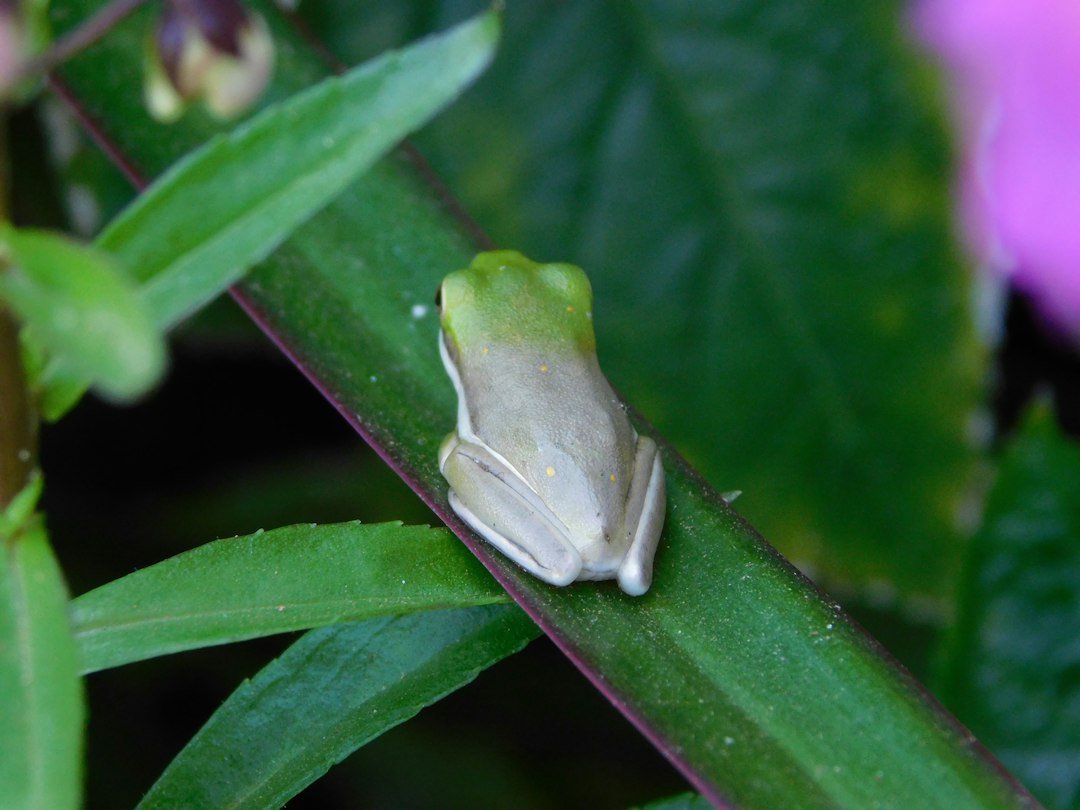
Quick answer: Herpetofauna means all the reptiles and amphibians that live in a certain place, such as a forest, a country or a lake. It includes animals like snakes, lizards, turtles, frogs, toads and salamanders.
Featured image: Photo by Shane Jacobson on Unsplash
It sounds like a word from a science fiction film, but herpetofauna is a real and very useful term in biology. If you have ever walked through a forest and seen a lizard on a rock or heard frogs by a pond, you have met herpetofauna. This guide explains the meaning, the origin and the importance of the word in plain language.
In this guide
What does herpetofauna mean?
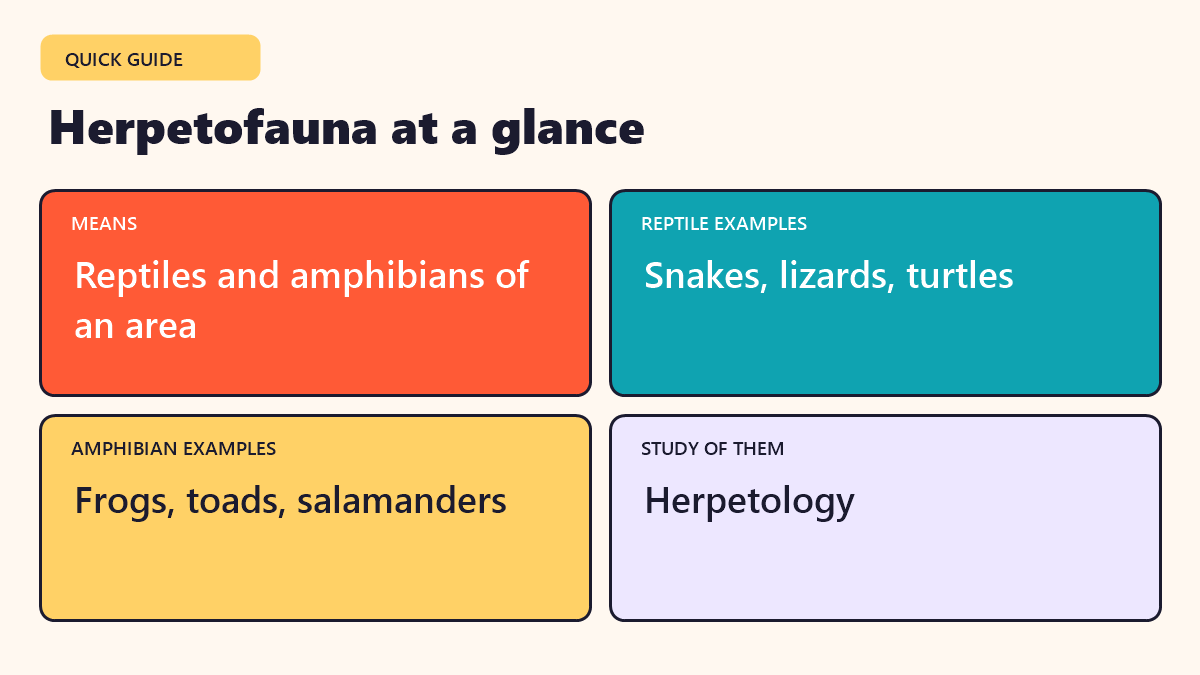
Herpetofauna is a collective word for all the reptiles and amphibians in a place. Scientists use it when they talk about a whole group of animals instead of listing each species. A report might say, “The park has a rich herpetofauna,” meaning it has many kinds of reptiles and amphibians.
It is pronounced her-puh-toh-FAW-nuh.
Where does the word come from?
The word comes from two Greek-based parts. Herpeton means “creeping animal” or “crawling thing,” and fauna is the Latin word for the animals of a region. Put together, it means “the creeping animals” of an area. The same first part appears in herpetology, the study of reptiles and amphibians, and in the casual nickname “herps.”
What animals are in the herpetofauna?
| Group | Examples | Key features |
|---|---|---|
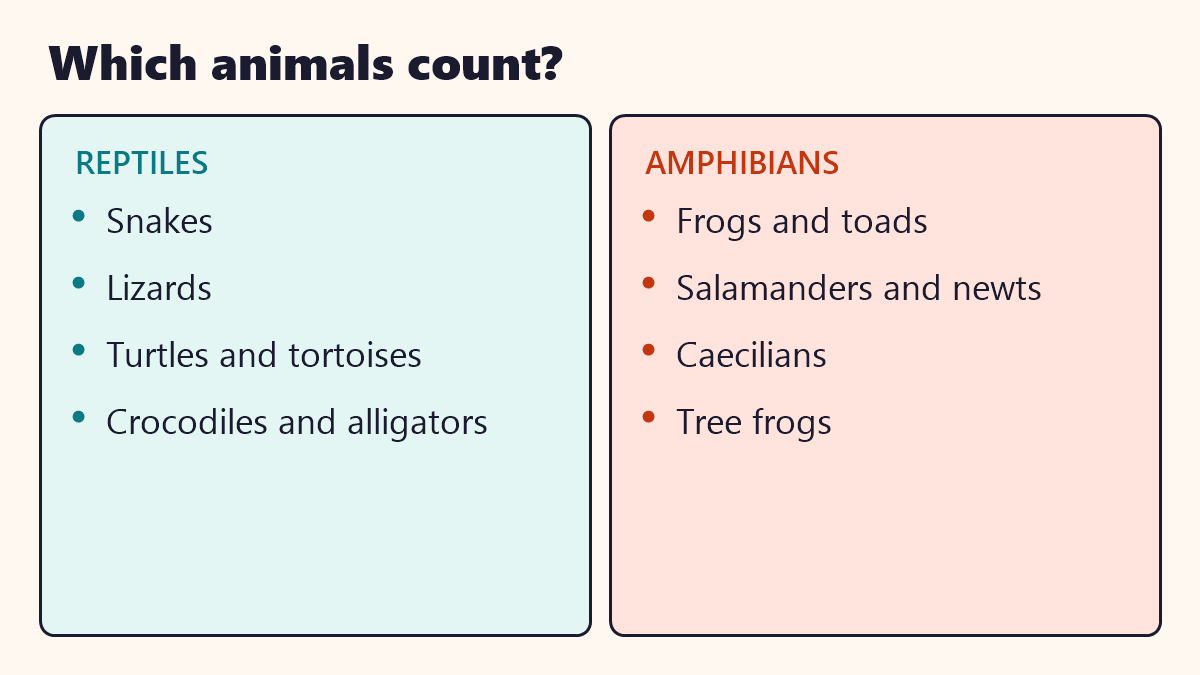
| Snakes | Cobras, pythons, garter snakes | Scaly skin, no legs |
| Lizards | Geckos, iguanas, skinks | Scaly skin, usually four legs |
| Turtles and tortoises | Sea turtles, box turtles | Hard shell |
| Crocodilians | Crocodiles, alligators | Large, strong jaws |
| Frogs and toads | Tree frogs, bullfrogs | Moist skin, strong back legs |
| Salamanders and newts | Fire salamander | Long body, a tail |
| Caecilians | Tropical caecilians | Legless, worm-like |
Reptiles usually have dry, scaly skin and lay eggs on land or give birth to live young. Amphibians usually have moist skin and often start life in water before moving to land.
Why are reptiles and amphibians grouped together?
Scientists know that reptiles and amphibians are separate groups of animals. Still, they often study them together for practical reasons. Many of them are cold-blooded, which means they depend on the temperature around them. They often live in similar places, such as ponds, logs and leaf litter, and they are searched for with similar methods. Grouping them makes field work easier.
How scientists study herpetofauna
- Visual encounter surveys. Researchers walk slowly and record every animal they see.
- Listening surveys. Frogs and toads are often counted by their calls at night.
- Pitfall traps. Small containers buried in the ground catch animals that walk by.
- Cover boards. Boards left on the ground give animals a shelter, and researchers check under them.
- Photography and tagging. Photos of patterns or tiny tags help track individuals over time.
Good studies are careful and gentle. Researchers use permits, clean their equipment and avoid hurting the animals.
Why herpetofauna matters
- Healthy ecosystems. Frogs and lizards eat many insects, and snakes control rodents.
- Food chains. They are also food for birds, fish and mammals.
- Warning signals. Amphibians have thin, moist skin that absorbs chemicals, so they react quickly to pollution.
- Climate clues. Their numbers and ranges can change as the climate shifts.
- Medicine and science. Studying their bodies has led to ideas for new treatments.
Threats to herpetofauna
Many species are under pressure around the world. Habitat loss, pollution, road traffic, illegal trade and climate change all play a part. Amphibians face an additional danger from a disease called chytridiomycosis, caused by a fungus that has contributed to the decline of many frog species. Conservation groups work to protect habitats, reduce pollution and track populations over time.
Related words
| Word | Meaning |
|---|---|
| Herpetology | The science of reptiles and amphibians |
| Herpetologist | A scientist who studies them |
| Avifauna | The birds of a region |
| Ichthyofauna | The fish of a region |
| Fauna | All animals of a region |
| Flora | All plants of a region |
Once you know the pattern, you can guess the meaning of many science words that end in “fauna.”
How to use the word herpetofauna
- “The island’s herpetofauna includes three kinds of lizards and two frogs.”
- “A survey of the herpetofauna was done before the road was built.”
- “Climate change threatens the herpetofauna of mountain wetlands.”
It is a formal word, so it works best in science, school reports and nature writing. In everyday talk, “reptiles and amphibians” is perfectly fine.
Common mistakes
- Thinking it means only reptiles. It includes amphibians too.
- Mixing it up with herpetology. One is the animals, the other is the science.
- Saying it has one animal. It is a group term.
- Mispronouncing the stress. Say “FAW,” not “her.”
Key takeaways
- Herpetofauna means all the reptiles and amphibians of a place.
- The word comes from Greek “herpeton” (creeping animal) and Latin “fauna.”
- Herpetology is the science that studies them.
- Reptiles and amphibians are different groups, studied together for practical reasons.
- Amphibians in particular are strong signals of environmental health.
Frequently asked questions
What does herpetofauna mean?
Herpetofauna means all the reptiles and amphibians found in a certain area.
How do you pronounce herpetofauna?
It is said her-puh-toh-FAW-nuh, with the stress on “FAW.”
What is the difference between herpetofauna and herpetology?
Herpetofauna is the group of animals. Herpetology is the science that studies them.
Are reptiles and amphibians related?
They are different animal groups, but scientists often study them together because they use similar habitats and survey methods.
Why are amphibians important to study?
Many amphibians are very sensitive to pollution and climate change, so they can warn us about the health of an environment.