
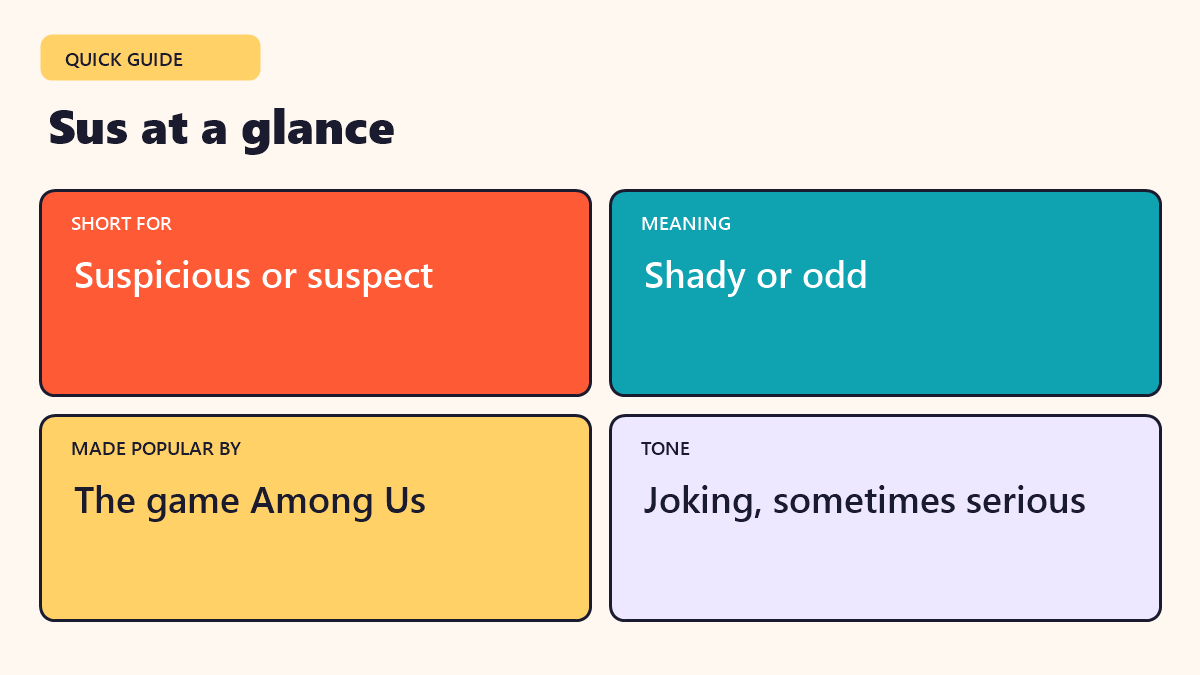
Quick answer: Sus is short for “suspicious” or “suspect.” People use it to say that something or someone seems odd, shady or not quite honest. It became hugely popular in 2020 thanks to the game Among Us.
Your friend says, “That excuse is sus,” and everyone laughs. You know it means something, but what exactly? Sus is a quick, handy slang word that has become part of everyday speech. This guide shows you where it came from, how to use it and when to hold back.
In this guide
What does sus mean?
Sus is short for “suspicious” or “suspect.” When you say something is sus, you mean it seems odd, shady or hard to trust. It works for people, messages, offers and stories. A strange text from an unknown number, a very late excuse or a too-good-to-be-true deal can all be sus.
Where does sus come from?
Short forms of “suspect” have been used in British English for many years, including in police slang. The modern slang meaning took off in 2020, when millions of people played the online game Among Us. In the game, players try to find the “impostor” among them, and the word “sus” became the standard way to point at someone who behaved strangely. Players carried the word out of the game and into videos, memes and everyday chats.
How people use sus
To joke about an excuse
Friend: My phone died right when you called.
You: Sus, but okay.
To spot something odd
You: I got a message saying I won a prize.
Friend: That is very sus. Do not click it.
In games
Teammate: Red was near the broken light.
You: Sus. Let us vote.
Notice that the joke mood and the serious mood can sit side by side. Sometimes a “sus” message really is a warning.
Sus in action: a quick table
| Situation | Sus or not? | Why |
|---|---|---|
| A text from an unknown number asks for your bank code | Very sus | It is a common scam |
| A friend says they were “busy” all day but posted ten stories | Playfully sus | The details do not match |
| A shop offers a new phone for ten dollars | Sus | Too good to be true |
| Your teacher gives extra points | Not sus | It is plain good news |
When “sus” is about safety, take it seriously. Do not share passwords, codes or personal details with anyone who seems shady.
How to use sus well
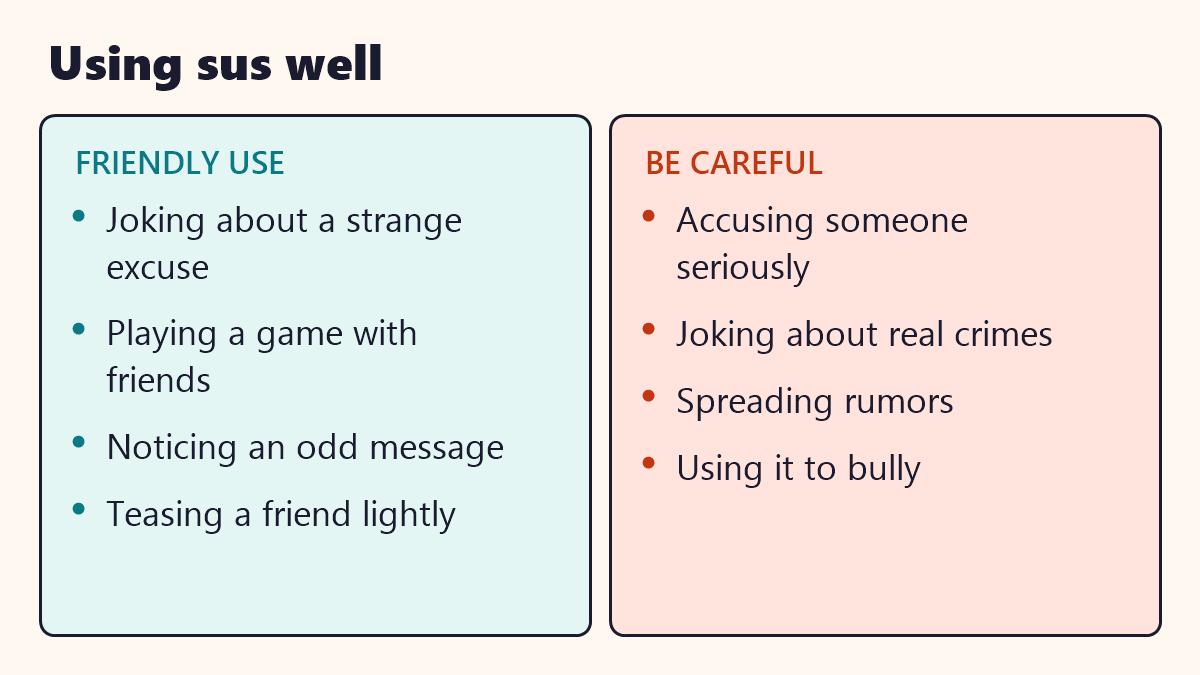
Sus works best as a light word. If you really think someone did something wrong, speak clearly and kindly instead of using slang.
Words like sus
- Shady: not trustworthy
- Fishy: odd, like something is wrong
- Questionable: doubtful
- Off: not right
- Cap: a lie
Common mistakes with sus
- Using it for real accusations. Calling someone sus in a serious situation can feel unfair.
- Using it to bully. Teasing is fine only when everyone is laughing.
- Ignoring real warnings. If something online feels sus, trust your instincts.
- Overusing it. It can get old fast.
Key takeaways
- Sus means suspicious, shady or odd.
- The game Among Us made it popular in 2020.
- It can be a joke or a real warning.
- Be kind when using it about people.
- Trust your instincts when something online feels sus.
Frequently asked questions
What does sus mean?
Sus means suspicious or shady. If something is sus, it feels like something is not right.
Where does sus come from?
It is short for “suspect” or “suspicious.” It rose sharply in 2020 because of the online game Among Us.
Is sus an old word?
Yes. Short forms of “suspect” have been used in British English for many decades, but the modern meaning spread through games and social media.
Is sus rude?
Not usually. It is often a joke, but accusing a real person of being sus can hurt, so be kind.
What does “that is sus” mean?
It means “that seems shady or hard to believe.”